
Taiwan Mahjong
Taiwanese Mahjong is a popular mahjong variant renowned for its unique rules and fast-paced gameplay. Unlike standard 13-tile mahjong, each player holds a 16-tile hand, allowing deeper strategic planning and tile combination possibilities. The defining feature of Taiwanese Mahjong: to win, you need five melds (Pung, Chow, Kong) plus one pair as the eyes, making it more challenging and requiring careful strategy.
Tile Set Used in Taiwanese Mahjong
Taiwanese Mahjong uses a standard set of 144 mahjong tiles, including 8 flower tiles.
Basic Rules of Taiwanese Mahjong
Each turn follows this fixed sequence:
- Draw one tile from the wall, or claim the tile just discarded by another player.
- Attempt to form a winning hand, aiming for five melds plus one pair of eyes. If you cannot win, proceed to Step 3.
- Discard one tile to the center of the table to end your turn.
- After a tile is discarded, other players may claim it to form melds or win directly. If no player claims the discard, the tile stays in the discard pile, and the next player draws from the wall.
Play proceeds counterclockwise, starting with the player on your right. You cannot passively wait even when it is not your turn. Although the default turn order is counterclockwise, players may claim discarded tiles out of turn under certain conditions. Even if you cannot Chow, Pung or Kong, keep track of discarded tiles to avoid waiting for tiles that have already been thrown away.
Game Setup
Like most mahjong variants, Taiwanese Mahjong is a four-player game. Dealing customs and rules may vary between tables and rule sets.
Selecting the Dealer
The first step is to select the dealer. For the opening round, shuffle the four wind tiles face down. Each player draws one wind tile and sits at the corresponding seat. After each hand, the next player in counterclockwise order becomes the new dealer. The round wind always starts with East; the dealer changes after every hand. After four hands complete a full rotation of dealers, the round wind cycles in order: East, South, West, North. Seats can also be determined by rolling dice.
Building the Wall
Next, shuffle and build the tile wall. Thoroughly shuffle all tiles face down. Each player builds their own section of the wall: 18 tiles stacked two high (36 tiles total). Join the four wall sections to form a closed square.
Breaking the Wall
Once the dealer is chosen, the dealer rolls the dice to decide where to break the wall. Example: the dealer rolls a total of 7. Starting from the wall section in front of themselves, count counterclockwise around the table: 1, 2, 3, 4, 5, 6, 7. The 7th wall section is where the wall will be broken.
Use the same dice total to select the break point. Starting from the near end of that wall section, count 7 stacks of tiles and lift the 7th stack. Count stacks from that player’s right toward their left. Tiles after this stack form the live drawing wall.
The entire wall forms a square tile stack around the table. The live wall is the top of the tile stock; tiles for dealing and player turns are drawn from here.
The 16 tiles to the right of the break point are called the dead wall. The dead wall supplies replacement tiles for Kongs, flower tiles and season tiles. The dead wall always keeps 16 tiles; any tiles taken from the dead wall must be replenished from the end of the live wall.
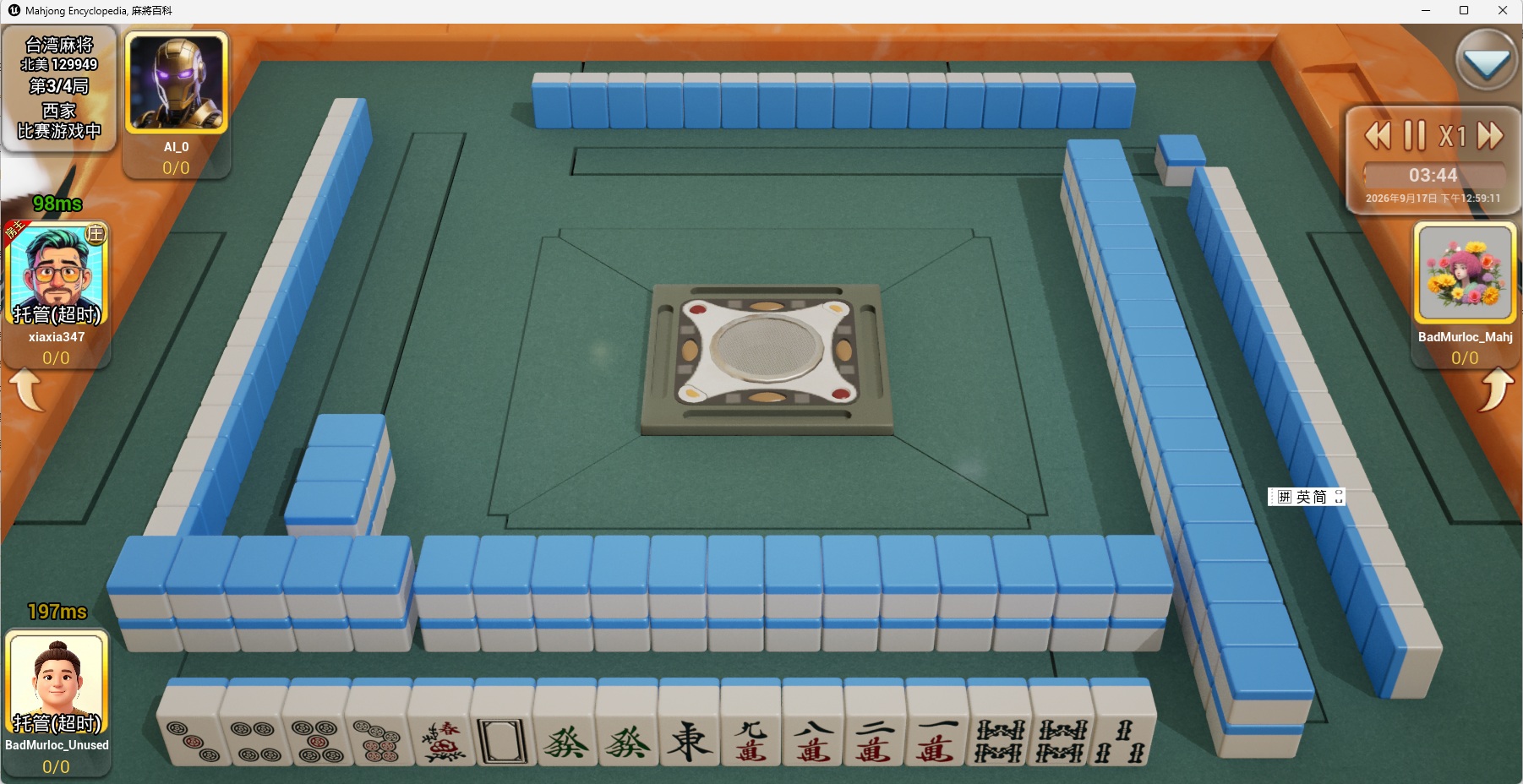
Dealing Tiles
Dealing starts with the dealer drawing from the live wall. The dealer takes 4 tiles (2 stacks). The player sitting in front of the live wall assists with dealing. Players take 4 tiles each in counterclockwise order. Repeat the round once more, so every player accumulates 16 tiles. The dealer draws one extra tile for a total of 17 tiles and makes the first discard.
Drawing Tiles
The primary way to obtain tiles is drawing from the live wall. You may also claim discarded tiles from other players to form valid melds or win. Claimed discard tiles must be revealed and placed alongside the completed meld; this exposed meld cannot be modified for the rest of the hand. You must declare Chow, Pung, Kong or Win immediately when a tile is discarded. Otherwise, the discard remains in the discard pile and cannot be claimed.
Chow, Pung and Kong
- Pung: Triplet, three identical tiles. If another player’s discard completes your triplet, call Pung, take the tile and place it face up beside your flower tiles. Pung takes priority over the normal turn order, skipping players between the discarder and you.
- Kong: Quad, four identical tiles. A Kong is an extended triplet and can also be formed by claiming a discard. After declaring Kong, draw one replacement tile from the dead wall to maintain hand size, which is required to win.
Normally you cannot claim a discard only to make a pair of eyes. The only exception is when you are already ready (tenpai) and only need one tile to win. Whether completing a triplet, sequence or pair of eyes, you may claim the winning tile when someone discards it. Winning by claiming another player’s discard is called a Ron win.
FAQ: What happens if two players want to claim the same discard? Priority order: Win > Pung / Kong. If two players both can win on the discard, the player who comes earlier in counterclockwise turn order after the discarder takes precedence.
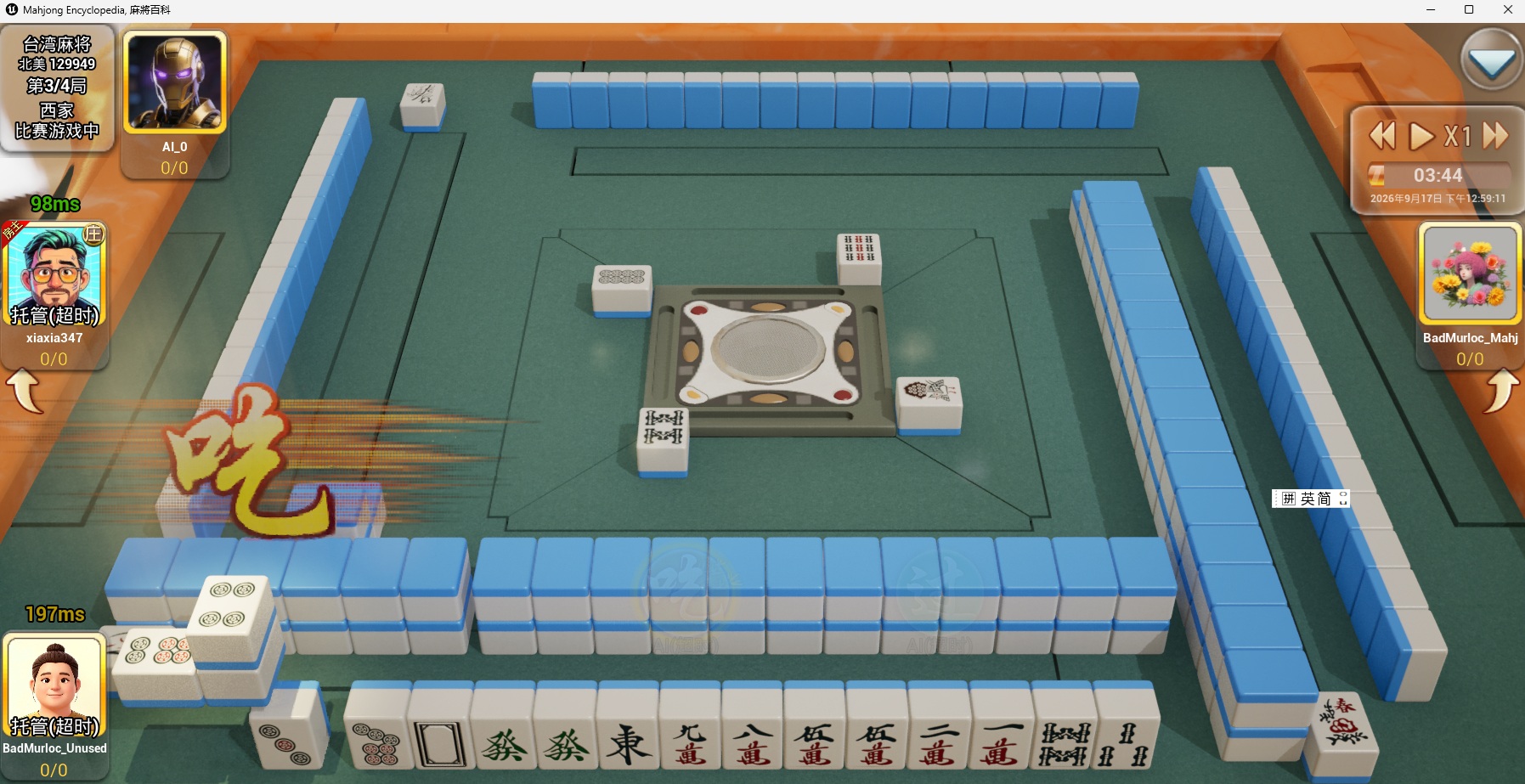
Organizing Your Hand
Remember, the goal of Taiwanese Mahjong is to form five melds plus one pair of eyes. After drawing a new tile, adjust your hand and try to integrate the new tile into your combinations.
As mentioned above, a Kong can be formed from another player’s discard. There is also a concealed Kong: four identical tiles all drawn by yourself, not claimed from discards. Concealed Kong tiles stay face down to hide your hand from opponents, but you must announce the Kong and draw a replacement tile from the dead wall. Flip the outer tiles to mark the concealed Kong. Like exposed melds, a concealed Kong cannot be altered once declared.
There is also an added Kong: an exposed triplet formed from a Pung. You cannot use another player’s discard to add a fourth tile to your triplet. But on your own turn, if you draw the fourth matching tile from the wall, you may declare an added Kong. Place this tile on top of the middle tile of the triplet and draw a replacement tile from the dead wall. Once exposed, the meld of an open Kong cannot be changed.
Discarding Tiles
Generally, discard tiles that are difficult to combine into melds with your hand. If you can guess what tiles your opponents need, avoid discarding dangerous tiles.
Ready Hand (Ting, declaring Ready)
The Ready mechanic shares some similarities with Riichi in Japanese Mahjong but has key differences. Whether your hand is fully concealed or already has exposed melds, you may declare Ready if your hand only needs one tile to win. You must declare Ready before making your discard. After declaring Ready, your play becomes semi-automatic and you cannot modify your hand. On your turn, draw a tile; if it is not your winning tile, you must discard it. The only exception: you may convert a concealed triplet in your hand into a concealed Kong, provided this does not change your waiting winning tile.
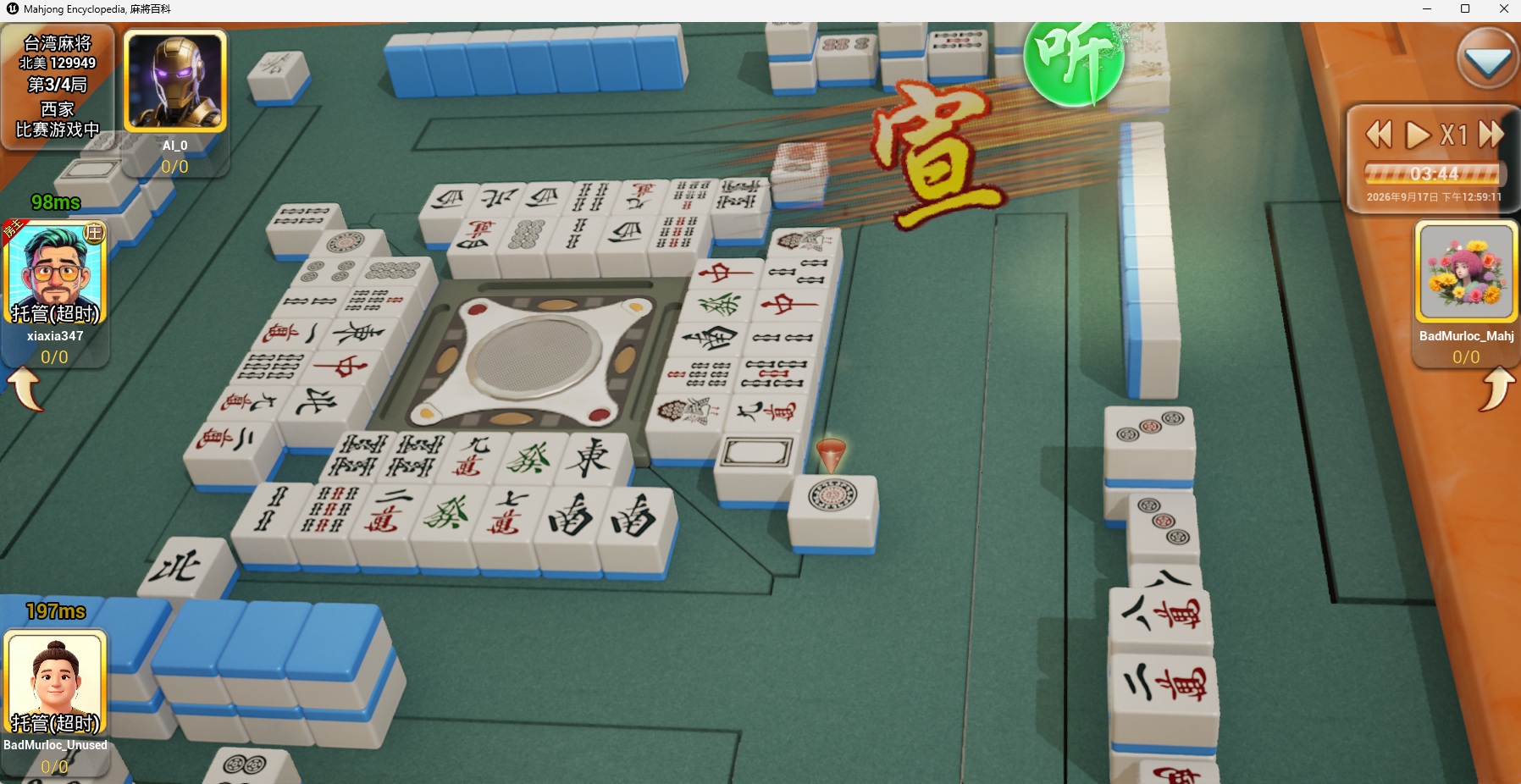
Advantages of declaring Ready
- Ready grants 1 Taiwan point, increasing your hand’s total points.
- It puts pressure on opponents, encouraging them to avoid risky discards and lowering their chance to win.
Disadvantages of declaring Ready
- You signal to opponents that you are one tile away from winning.
- Even if you draw excellent tiles later, you cannot restructure your hand.
- If you do not draw your winning tile, you may be forced to discard dangerous tiles.
Despite these drawbacks, the extra point from Ready is valuable in most cases, so declaring Ready is usually recommended. There are a few exceptions: your hand already has a high point value, or you suspect an opponent holds a high-scoring hand and wish to avoid the risk of dealing in.
Passing the Final Tile Draw
A player may choose not to take the last tile from the wall. The hand ends in a draw with no winner. The dealer retains their position, and consecutive dealer count increases.
Winning Rules of Taiwanese Mahjong
A player who forms five melds plus one pair of eyes may declare a win.
Only One Winner
If one discard allows multiple players to win, the player who is earlier in counterclockwise order after the discarder wins the hand.
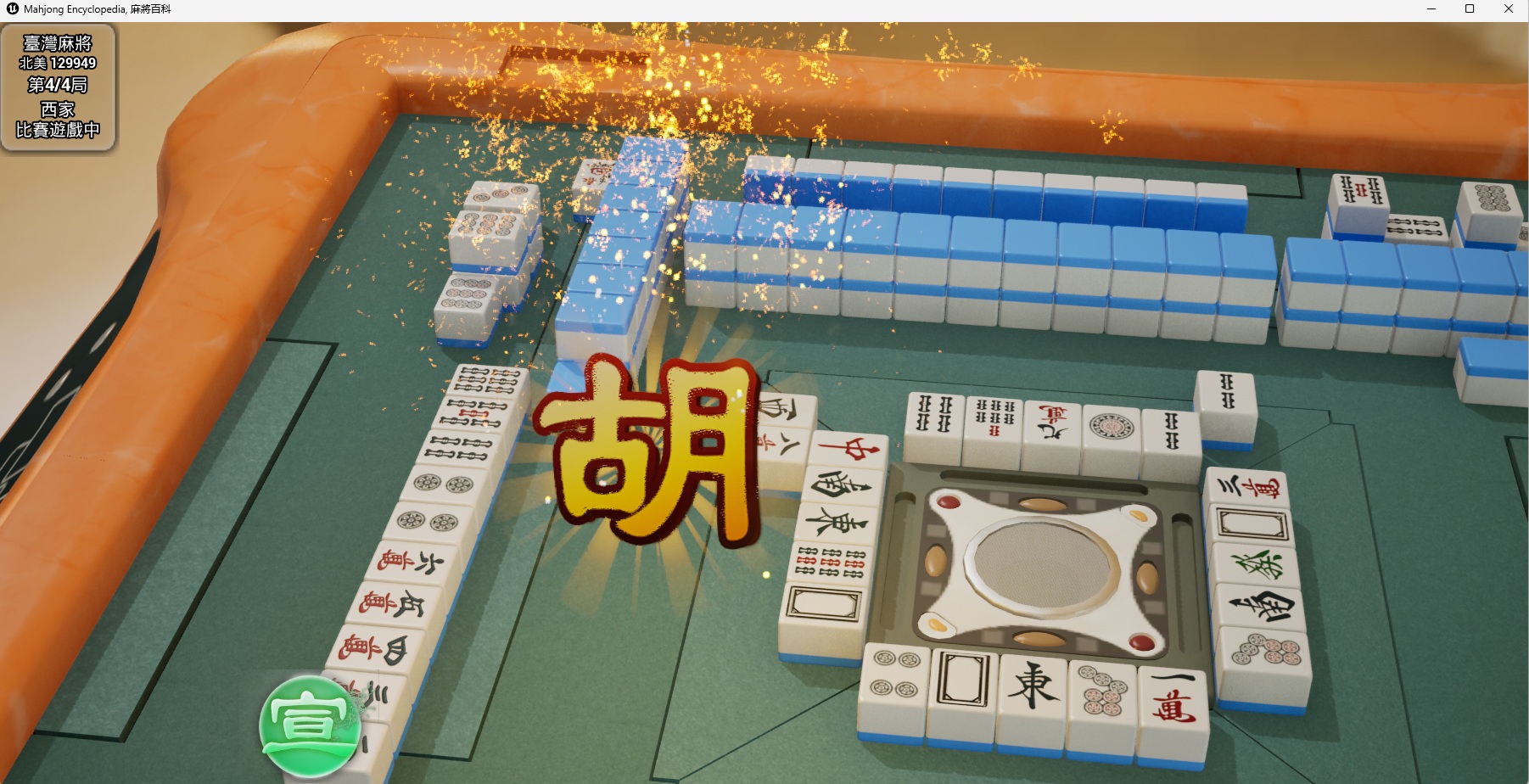
Scoring: Taiwan Point Calculation
Taiwanese Mahjong uses Taiwan points as its scoring unit. Different tile combinations and game conditions accumulate points, and certain rare high-scoring hands greatly boost your total.
Starting Score
Taiwanese Mahjong has no starting points.
Dealer Bonuses & Penalties
The dealer gains or loses an extra 1 point when winning or losing. If the dealer wins or the hand ends in a draw, the dealer stays for another hand. Each consecutive dealer round adds ±2 points. Example: If the dealer loses after two consecutive dealer hands, they pay the winner 1 + (2*2) = 5 points.
Self-Draw Scoring
When a player wins by self-draw, all losing players pay the winner points equal to the total points of the winning hand. If the dealer is not the East round dealer, the dealer additionally pays points equal to the base 1 dealer point plus accumulated consecutive dealer points.
Taiwanese Mahjong Point Table
English Name | Chinese | Local Term | Description | Points | Category |
Dealer | 莊家 | 莊家 | Dealer; ±1 point whether winning or losing | 1 | Seat Related |
Consecutive Dealer | 連莊 | 連莊 | Dealer stays after a win or draw | 1 | Seat Related |
Dealer Continuation | 拉莊 | 拉莊 | Extra point for consecutive dealer | 1 | Seat Related |
Concealed Hand | 門清 | 門清 | No Chow, Pung or Open Kong during the winning hand | 1 | Winning Condition |
Ready | 聽牌 | 聽牌 | Hand declared ready | 1 | Winning Condition |
No Flowers | 無花 | 無花 | Hand contains no flower tiles | 1 | Special Condition |
Flower Tile | 花牌 | 花牌 | 1 point per flower tile | 1 | Special Condition |
Pung Of Winds | 風牌刻子 | 風牌 | Holding a wind triplet | 1 | Triplet Type |
Pung of Dragons | 三元牌刻子 | 三元牌 | Holding a dragon triplet | 1 | Triplet Type |
No Honors | 無字 | 無字 | Hand contains no honor tiles | 1 | Suit Type |
Self-draw | 自摸 | 自摸 | Win by drawing the winning tile yourself | 1 | Winning Condition |
Robbing The Kong | 搶槓 | 搶槓 | Win by robbing the tile added in an added Kong | 1 | Winning Condition |
Last Tile Win (Discard) | 河底撈魚 | 河底撈魚 | Win on the very last discard tile | 1 | Winning Condition |
Last Tile Win (Self-Draw) | 海底撈月 | 海底撈月 | Win by drawing the final tile from the wall; stacks with self-draw point | 1 | Winning Condition |
Melded Kong | 明槓 | 明槓 | Hand contains an open Kong | 1 | Kong Type |
Concealed Kong | 暗槓 | 暗槓 | Hand contains a concealed Kong | 2 | Kong Type |
Single Wait | 獨聽 | 獨聽 | Win on a single tile wait | 2 | Winning Condition |
Closed Wait | 間聽 | 間聽 | Win on a middle tile wait (kanchan) | 2 | Winning Condition |
Two Concealed Pungs | 兩暗刻 | 兩暗刻 | Hand holds two concealed triplets | 2 | Triplet Type |
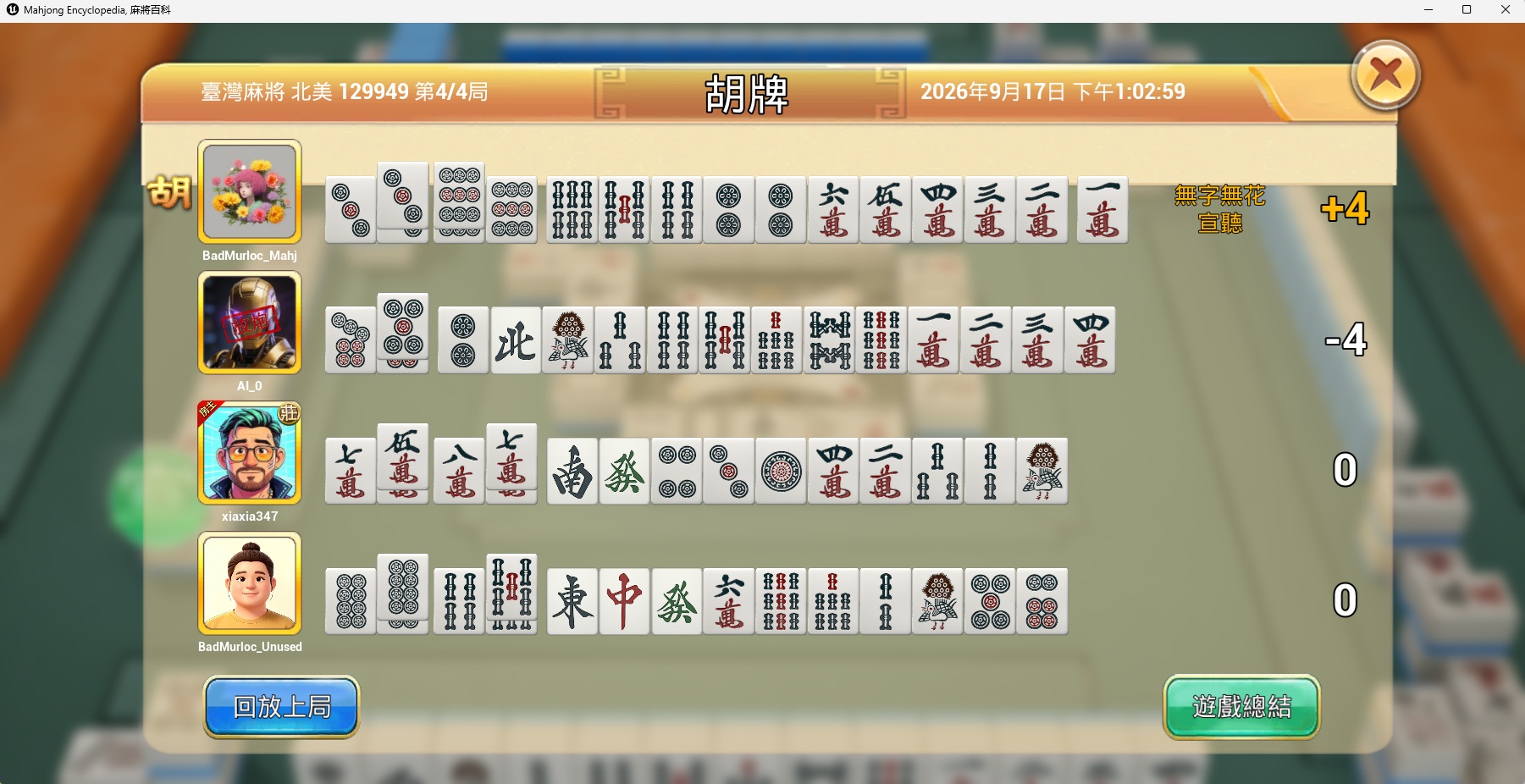
No Honors Or Flowers | 無字無花 | 無字無花 | Hand has neither honor tiles nor flower tiles | 3 | Suit Type |
Fully Concealed Hand | 門清不求 | 門清不求 | Concealed hand win by self-draw; does not stack with concealed hand / self-draw | 3 | Winning Condition |
All Sequences | 小平和 | 小平和 | Hand made entirely of sequences; may include flower tiles or honor pair | 3 | Sequence Type |
Three Concealed Triplets | 三暗刻 | 三暗刻 | Hand holds three concealed triplets | 5 | Triplet Type |
Win Within 5–10 Discards | 速和 | 速和 | Win when 5–10 tiles have been discarded | 5 | Winning Condition |
Full Straight (Open) | 外龍 | 外龍 | Complete 1-9 straight of one suit, at least one sequence exposed | 5 | Sequence Type |
Little Three Winds | 小三風 | 小三風 | Two wind triplets plus one wind pair | 5 | Honor Type |
Half Flush | 混一色 | 混一色 | Single suit mixed with honor tiles | 10 | Suit Type |
All Triplets | 對對胡 | 對對胡 | Hand made entirely of triplets | 10 | Triplet Type |
Full Straight (Closed) | 內龍 | 內龍 | Complete 1-9 straight of one suit, all sequences concealed | 10 | Sequence Type |
All Sequences | 大平和 | 大平和 | All sequences, no honor tiles and no flower tiles | 10 | Sequence Type |
All Revealed | 全求人 | 全求人 | All melds exposed; eyes can be Ron or self-draw | 10 | Winning Condition |
Win Within 5 Discards | 速和 | 速和 | Win within the first 5 discarded tiles | 10 | Winning Condition |
Little Three Dragons | 小三元 | 小三元 | Two dragon triplets plus one dragon pair | 10 | Honor Type |
Immediate Ready Hand | 天聽 | 天聽 | Hand is ready immediately after dealing; must declare, hand cannot change afterwards | 10 | Winning Condition |
Big Three Winds | 三風 | 三風 | Three wind triplets | 10 | Honor Type |
Four Concealed Triplets | 四暗刻 | 四暗刻 | Four concealed triplets; Kongs count as concealed triplets | 10 | Triplet Type |
7 Flowers And Robbing | 七搶一 | 七搶一 | Draw seven flower tiles and win on the eighth flower tile; no additional points counted | 20 | Special Condition |
All Flowers | 八仙過海 | 八仙過海 | Collect all eight flower tiles for an instant win; no additional points counted | 30 | Special Condition |
Little Four Winds | 小四喜 | 小四喜 | Three wind triplets plus one wind pair | 30 | Honor Type |
Big Three Dragons | 大三元 | 大三元 | Three dragon triplets / Kongs | 30 | Honor Type |
Seven Pairs And A Pung | 七對 | 七對 | Seven pairs plus one triplet; duplicate pairs allowed | 30 | Special Condition |
Big Four Winds | 大四喜 | 大四喜 | Four wind triplets / Kongs | 40 | Honor Type |
Full Flush | 清一色 | 清一色 | Hand entirely of one suit | 40 | Suit Type |
Blessing Of Heaven | 天胡 | 天胡 | Dealer wins immediately on the starting hand | 40 | Winning Condition |
Blessing Of Earth | 地胡 | 地胡 | Non-dealer wins on the dealer’s very first discard | 40 | Winning Condition |
Five Concealed Pungs | 五暗刻 | 五暗刻 | Five concealed triplets; Kongs count as concealed triplets | 40 | Triplet Type |
Rule referenced mahjongpros.com