
Singapore Mahjong
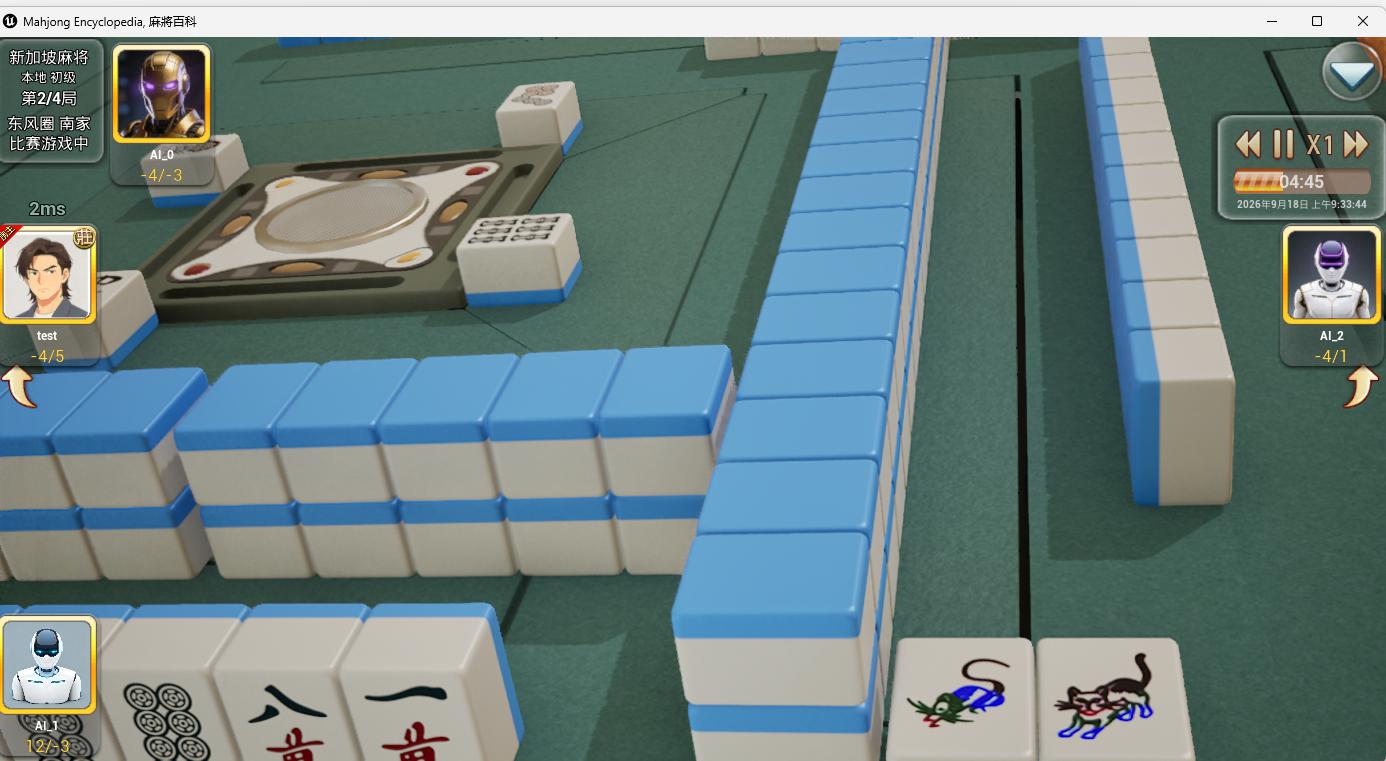
Singaporean Mahjong is an entertaining mahjong variant. The set includes four animal tiles: Cat, Rat, Rooster, Centipede. Interestingly, these four animal tiles form two predator-prey pairs: Cat & Rat, Rooster & Centipede. Unlike the flower tile set, animal tiles have no numerical markings.
1. Tile Set Used in Singaporean Mahjong
Singaporean Mahjong uses a total of 148 tiles. Based on the standard 144 mahjong tiles (Character, Dot, Bamboo, Dragon, Wind, Flower tiles), four extra animal tiles are added: Cat, Rat, Rooster, Centipede.
2. Basic Rules of Singaporean Mahjong
Each turn follows this fixed sequence:
- Draw one tile from the wall, or claim the tile just discarded by another player.
- Attempt to form a winning hand; the goal is four melds plus one pair of eyes. If you cannot win, proceed to Step 3.
- Discard one tile to the center of the table to end your turn.
- After a tile is discarded, other players may claim it to form melds or win directly. If no player claims the discard, the tile stays in the discard pile for the rest of the hand, and the next player draws from the wall.
Play proceeds counterclockwise starting with the player on your right. You cannot passively wait even when it is not your turn. Although the default turn order is counterclockwise, players may claim discarded tiles out of turn under certain conditions. Even if you cannot Chow, Pung or Kong, keep track of discarded tiles to avoid waiting for tiles that have already been thrown away.
3. Game Setup
Selecting the Dealer
The first step is to select the dealer. For the opening round, shuffle the four wind tiles face down. Each player draws one wind tile and sits at the corresponding seat. After each hand, the next player in counterclockwise order becomes the new dealer. The round wind always starts with East; the dealer changes after every hand. After four hands complete a full rotation of dealers, the round wind cycles in order: East, South, West, North.
Building the Wall
Next, shuffle and build the tile wall. Thoroughly shuffle all tiles face down. Each player builds their own section of the wall: two players build walls of 18 tiles stacked two high (36 tiles total), while the other two build walls of 19 tiles stacked two high (38 tiles total). Join the four wall sections to form a closed square.
Breaking the Wall
Once the dealer is chosen, the dealer rolls the dice to decide where to break the wall. Example: the dealer rolls a total of 7. Starting from the wall section in front of themselves, count counterclockwise around the table: 1, 2, 3, 4, 5, 6, 7. The 7th wall section is where the wall will be broken.
Use the same dice total to select the break point. Starting from the near end of that wall section, count 7 stacks of tiles and lift the 7th stack. Count stacks from that player’s right toward their left. Tiles after this stack form the live drawing wall.
The tile wall forms a square tile stack around the table. The live wall is the top of the tile stock; tiles for dealing and player turns are drawn from here.
The dead wall of Singaporean Mahjong is fixed at 15 tiles, located on the left side of the live wall. Replacement tiles are only drawn from the dead wall for flower draws and Kong draws. The break operation separates the live wall from the dead wall.
Dealing Tiles
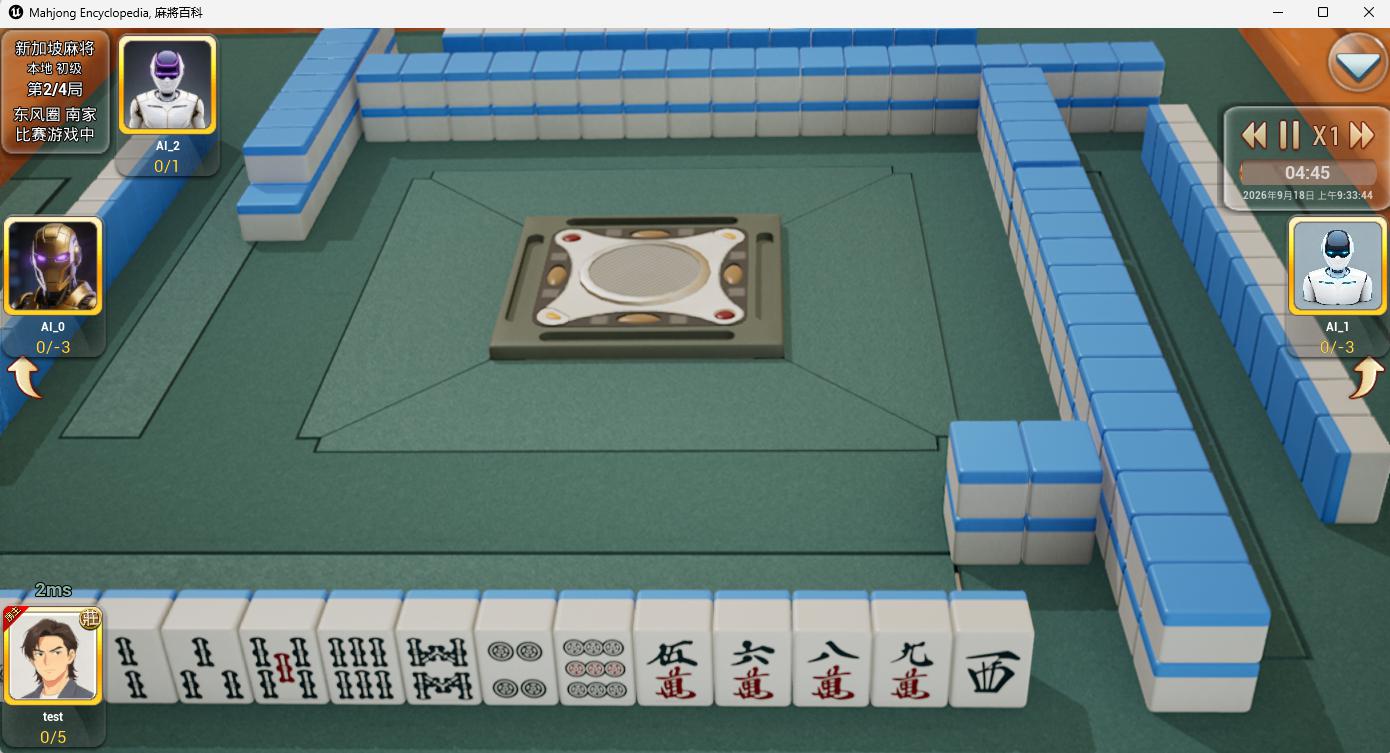
Dealing starts with the dealer drawing from the live wall. The dealer takes 4 tiles (2 stacks). The player sitting in front of the live wall assists with dealing. Players take 4 tiles each in counterclockwise order. Repeat the round once more so every player accumulates 12 tiles. After drawing 12 tiles, each player draws one more tile for a hand of 13 tiles. The dealer draws one extra tile for a total of 14 tiles and makes the first discard.
Flower & Animal Tile Replacement (Optional)
Players may arrange their hand by suit and number, then check for flower tiles and animal tiles. If holding flower or animal tiles, reveal them between your hand and the wall, then draw replacement tiles from the end of the dead wall. The dealer draws replacement tiles first until no more flowers are drawn. Then South, West and North players draw replacements in sequence until no hidden flower tiles remain in any hand. After all flower replacements finish, if the dealer cannot win, the dealer must discard an unwanted tile. Under tournament rules, the full sequence from arranging hands to the dealer’s first discard must be completed within 20 seconds.
Drawing Tiles
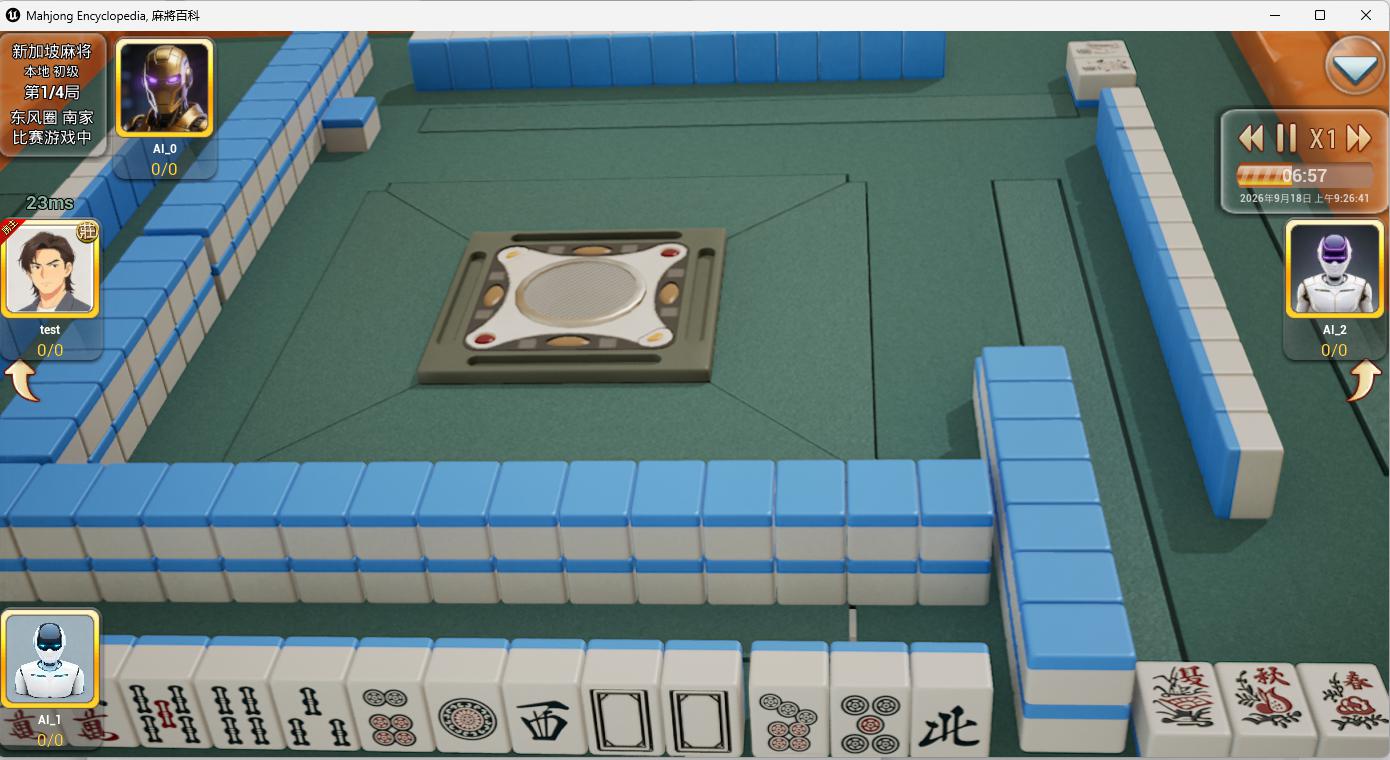
The primary way to obtain tiles is drawing from the live wall. If you draw a flower tile, you must reveal it and draw a replacement tile from the dead wall.
The other method is claiming discarded tiles from other players to form valid melds or win. Claimed discard tiles must be revealed and placed alongside the completed meld; this exposed meld cannot be modified for the rest of the hand. You must declare Chow, Pung, Kong or Win immediately when a tile is discarded. Otherwise, the discard remains in the discard pile and cannot be claimed.
Chow, Pung and Kong
- Pung: Triplet, three identical tiles. If another player’s discard completes your triplet, call Pung, take the tile and place it face up beside your flower tiles. Pung takes priority over normal turn order and skips players between the discarder and you.
- Kong: Quad, four identical tiles. A Kong is an extended triplet and can also be formed by claiming a discard. After declaring Kong, draw one replacement tile from the dead wall to maintain hand size, which is required to win.
- Chow: Sequence, three consecutive numbered tiles of the same suit. Unlike Pung and Kong, Chow can only be declared on your turn and only on a discard from the player immediately before you. The only exception is when claiming this tile wins the hand.
Normally you cannot claim a discard only to make a pair of eyes. The only exception is when you are already tenpai and only need one tile to win. Whether completing a triplet, sequence or pair of eyes, you may claim the winning tile when someone discards it. Winning by claiming another player’s discard is called a Ron win.
FAQ: What happens if two players want to claim the same discard? Priority order: Win > Pung / Kong. If two players both can win on the discard, the player who comes earlier in counterclockwise turn order after the discarder takes precedence.
Organizing Your Hand
The objective of mahjong: form four melds plus one pair of eyes. After drawing a new tile, adjust your hand and try to integrate the new tile into your combinations.
A Kong can be formed from another player’s discard. There is also a concealed Kong: four identical tiles all drawn by yourself, not claimed from discards. Concealed Kong tiles stay face down to hide your hand from opponents, but you must announce the Kong and draw a replacement tile from the dead wall. Flip the outer tiles to mark the concealed Kong.
There is also an added Kong: an exposed triplet formed from a Pung. You cannot use another player’s discard to add the fourth tile to your triplet. But on your own turn, if you draw the fourth matching tile from the wall, you may declare an added Kong. Place this tile on top of the middle tile of the triplet and draw a replacement tile from the dead wall. Once exposed, the meld of an open Kong cannot be changed.
Discarding Tiles
Generally, discard tiles that are difficult to combine into melds with your hand. If you can guess what tiles your opponents need, avoid discarding dangerous tiles. Discarded tiles go into the discard pile and do not need to be neatly arranged.
4. Winning Rules of Singaporean Mahjong
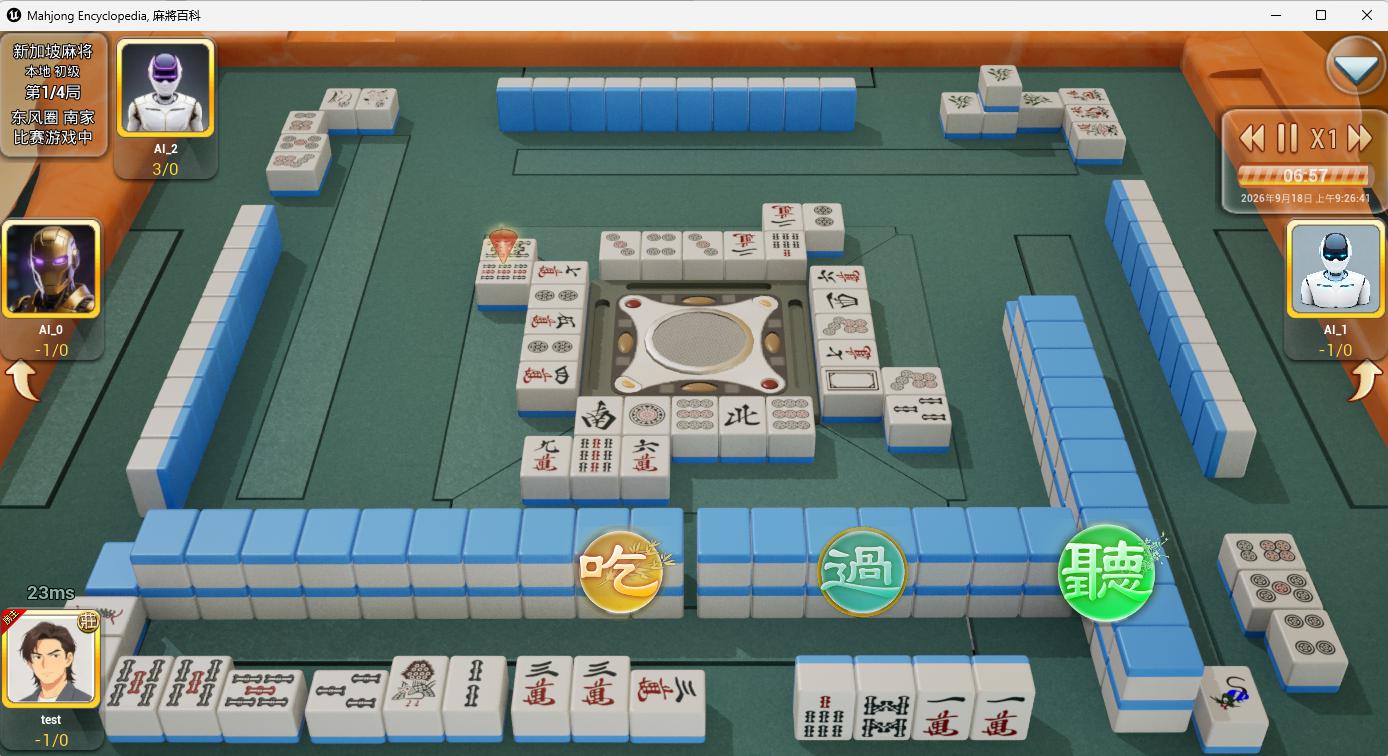
A player can declare a win when forming four melds plus one pair of eyes, with a minimum of 2 tai points (animal tiles, flower tiles and tenpai status do not count towards this threshold). Unlike most 14-tile mahjong variants, Singaporean Mahjong does not recognise Seven Pairs as a valid winning hand. Thirteen Orphans is allowed, and collecting all 8 flower tiles is also a valid winning condition.
Temporary Discard Lock Rule (similar to Furiten in Japanese Mahjong)
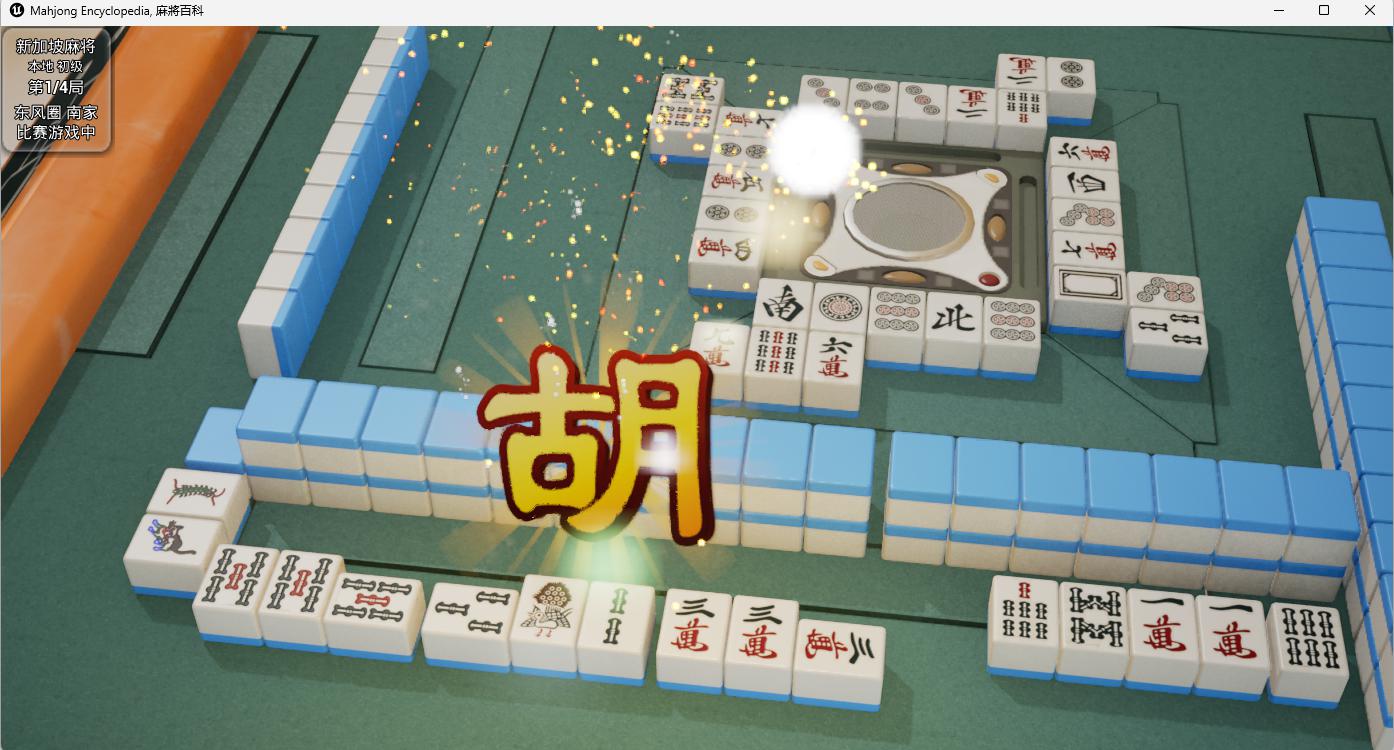
If a tenpai player has previously discarded their own winning tile, they cannot Ron win on the same tile discarded by another player afterwards. Self-draw win is not restricted by this rule.
Bao Penalty Rule
Bao liability is triggered under specific scenarios. The player who discards the dangerous tile takes full responsibility for all gains and losses of the win, regardless of who provides the winning tile.
Scenario | Dangerous Discard | Bao Consequence |
Fewer than 7 tiles remaining in live wall | New tile that has never appeared in discards or exposed melds | Tile used to Kong; liability applies only for this Kong, no impact on win settlement |
Fewer than 5 tiles remaining in live wall | New tile that has never appeared in discards or exposed melds | Tile claimed for Ron win; or used to Kong, and the replacement tile drawn from Kong wins |
Potential winner has exposed animal / flower / dragon triplets summing to 4+ tai | Dragon tiles, round wind or seat wind tiles | Claiming this tile wins for 5+ tai; or forms a meld leading to a later win of 5+ tai |
Potential winner has exposed 3+ melds of the same suit | Tiles of that suit | Claiming this tile wins All Same Suit; or forms a meld leading to a later All Same Suit win |
Potential winner has exposed two dragon triplets | The remaining dragon tile | Claiming this tile wins Small Three Dragons or Big Three Dragons |
Potential winner has exposed three wind triplets | The remaining wind tile | Claiming this tile wins Small Four Winds or Big Four Winds |
Potential winner has exposed 3+ honour triplets | Any remaining honour tile | Claiming this tile wins All Honours; or forms a meld leading to a later All Honours win |
Singaporean Mahjong Tai Count & Payout Calculation
Starting Score
Singaporean Mahjong has no starting points.
Instant Bonus Table (Optional Rule, must be agreed by all players before starting)
Amount | Hand / Condition | Description | Category |
SGD 2 | Animal Pair (Bitten) | Hold Cat + Rat OR Rooster + Centipede | Special Bonus |
SGD 4 | Starting Animal Pair | Cat + Rat OR Rooster + Centipede in your initial dealt hand | Special Bonus |
SGD 2 | Flower & Season Pair | Hold flower and season tile matching your seat wind | Special Bonus |
SGD 4 | Starting Flower & Season Pair | Matching flower & season tile in your initial dealt hand | Special Bonus |
SGD 4 | Complete Four Seasons | Collect all four season tiles | Special Bonus |
SGD 4 | Complete Four Flowers | Collect all four flower tiles | Special Bonus |
SGD 1 | Open Kong | Kong declared on discard OR added Kong on a Pung | Kong Bonus |
SGD 2 | Concealed Kong | Self-drawn four-of-a-kind concealed Kong | Kong Bonus |
SGD 4 | All Four Animals* | Collect all four animal tiles | Kong Bonus |
*All Four Animals bonus stacks with animal pair bonuses. Example: Cat-Rat pair SGD2 + Rooster-Centipede pair SGD2 + All Four Animals SGD2 = Total SGD8.
Winning Payout Table
Maximum 5 tai for normal hands; Big Three Dragons and Big Four Winds cap at 10 tai.
Ron Win (Win on opponent’s discard)
Tai Points | Paid by each non-winning player | Extra paid by discarder | Total to Winner |
1 | SGD 1 | SGD 2 | SGD 4 |
2 | SGD 2 | SGD 4 | SGD 8 |
3 | SGD 4 | SGD 8 | SGD 16 |
4 | SGD 8 | SGD 16 | SGD 32 |
5 (Max Tai) | SGD 16 | SGD 32 | SGD 64 |
10 (Max Tai) | SGD 32 | SGD 64 | SGD 128 |
Self-Draw Win
Tai Points | Paid by every player | Total to Winner |
1 | SGD 2 | SGD 6 |
2 | SGD 4 | SGD 12 |
3 | SGD 8 | SGD 24 |
4 | SGD 16 | SGD 48 |
5 (Max Tai) | SGD 32 | SGD 96 |
10 (Max Tai) | SGD 64 | SGD 192 |
Singaporean Mahjong Tai Table
Hand / Action | Tai Points | Description |
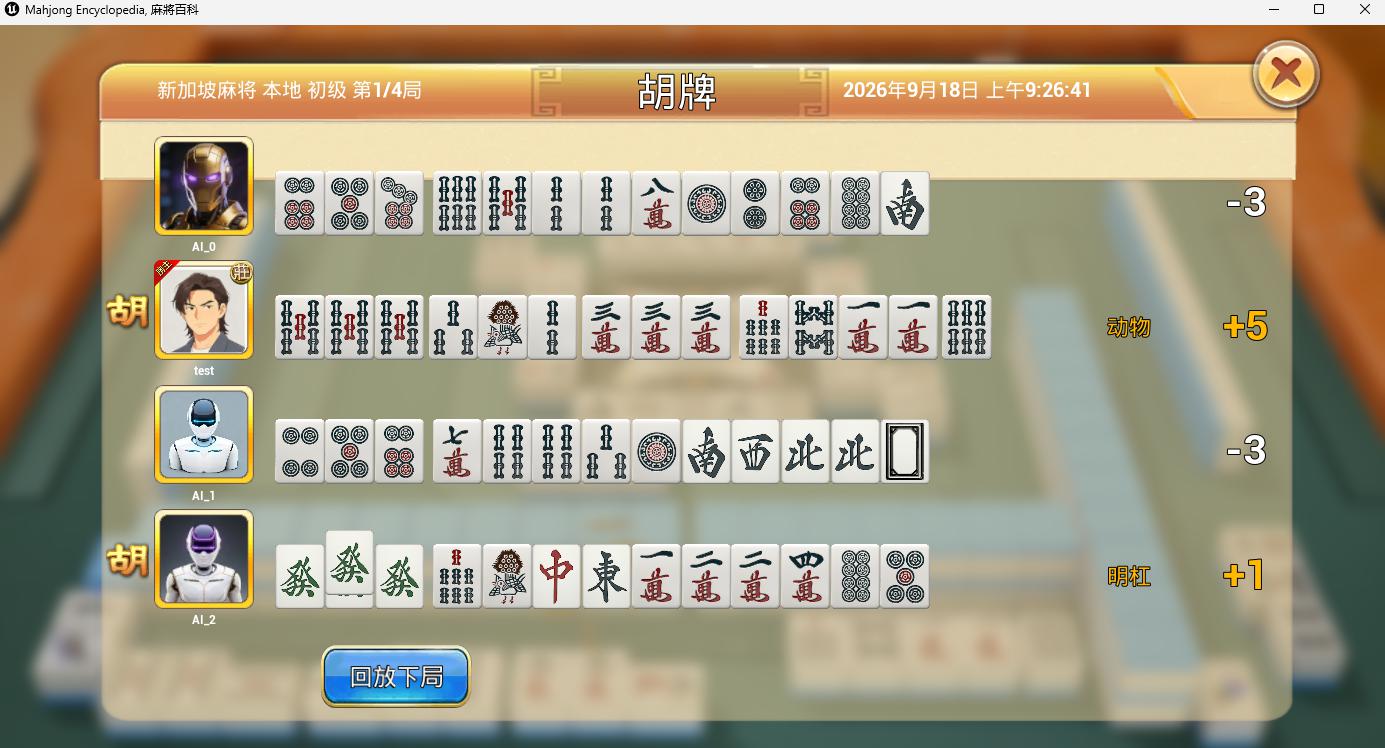
Animal Tile (any single) | 1 | 1 tai per animal tile (Cat, Rat, Rooster, Centipede) |
Seat Wind Flower / Season | 1 | Flower or season tile matching your seat wind; no point if unmatched |
Dragon Triplet | 1 | Any triplet of dragon tiles |
Valid Wind Triplet | 1 | Triplet of round wind or your seat wind |
Plain Hand (Bad Plain Hand) | 1 | Four sequences + a pair; pair cannot be dragon or valid wind. Ron win requires multi-sided wait; self-draw allows single wait. Exception: not valid if all four sequences are exposed |
Concealed Hand | 1 | No exposed melds except flower, season and animal tiles; win by self-draw only |
Replacement Tile Win | 1 | Win on replacement tile drawn after flower or Kong |
Robbing Kong Win | 1 | Win by robbing the tile added in an added Kong |
Last Tile Win | 1 | Win on the final tile drawn from live wall (replacement tile win excluded) |
All Four Flowers / All Four Seasons | 2 | Collect all four flower tiles OR all four season tiles; stacks with individual seat flower tai |
Half Flush | 2 | Hand consists of one suit mixed with honour tiles |
All Triplets | 2 | Four triplets plus one pair |
Small Three Dragons | 3 | Two dragon triplets plus a dragon pair; does not stack with individual dragon triplet points |
Full Flush | 4 | Entire hand of a single suit |
Big Plain Hand | 4 | Meets Plain Hand requirement with no flower, animal or season tiles; does not stack with Plain Hand |
Terminals and Honours | 4 | Hand made entirely of terminal and honour tiles; does not stack with dragon / valid wind triplet points |
Small Four Winds | 4 | Three wind triplets plus a wind pair; does not stack with valid wind triplet or Half Flush points |
Seven Flowers / Seasons | 5 | Collect seven flower & season tiles; can rob the last tile to win |
All Eight Flowers & Seasons | 5 (Max Tai) | Collect all eight flower and season tiles for instant win |
All Four Animals | 5 | Collect all four animal tiles |
Big Three Dragons | 10 (Max Tai) | Three dragon triplets / Kongs |
Big Four Winds | 10 (Max Tai) | Four wind triplets / Kongs |
Four Concealed Triplets | 5 (Max Tai) | Four concealed triplets, win by self-draw; concealed Kongs allowed |
Thirteen Orphans | 5 (Max Tai) | One of each terminal and honour tile plus one duplicate as pair; always treated as self-draw win |
All Green | 5 (Max Tai) | Hand composed only of Bamboo 2,3,4,6,8 and Green Dragon |
Nine Gates | 5 (Max Tai) | 1112345678999 of one suit; waits for any tile of that suit |
Eighteen Arhats | 5 (Max Tai) | Four Kongs plus one pair |
Kong on Kong Win | 5 | Draw replacement tile and win after declaring two or more Kongs in the same turn |
Blessing of Heaven | 5 (Max Tai) | Dealer wins immediately on initial dealt hand |
Blessing of Earth | 5 (Max Tai) | Non-dealer wins before any discard is claimed in the first round |
Rule referenced mahjongpros.com