
International Standard Mahjong
International Standard Mahjong is a variant of mahjong whose rules were formulated by the Chinese General Administration of Sport in July 1998. It has since been adopted in numerous international and domestic mahjong competitions, hence the name International Standard Mahjong. The standard rules remove the gambling nature of casual mahjong and expand the number of scoring fan patterns to 81, greatly boosting fun and competitiveness. A minimum of 8 fan points is required to win a hand, raising the difficulty while enriching gameplay. International Standard Mahjong is gradually gaining popularity as a fashionable recreational activity.
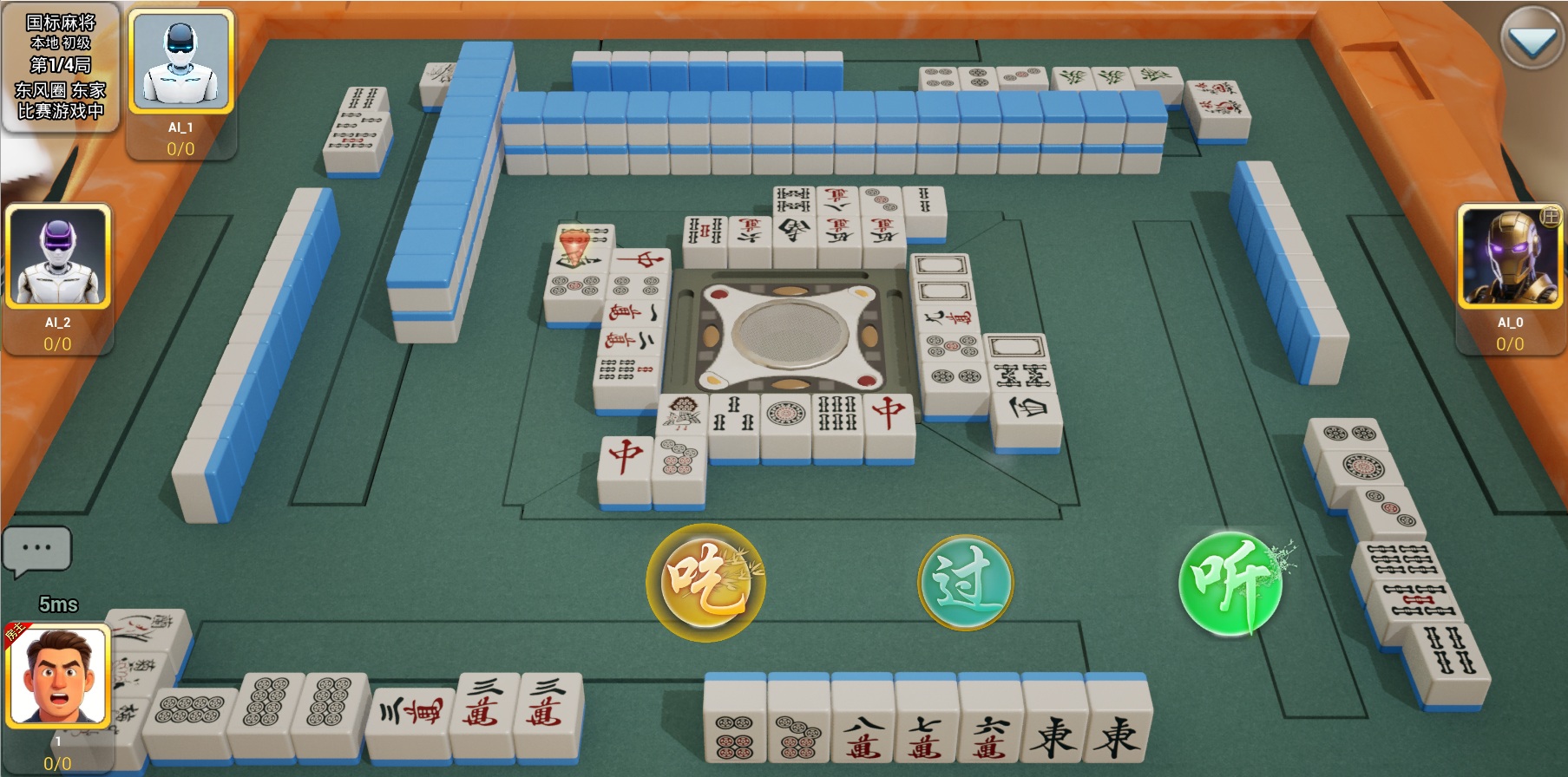
Core Rules
- A full match consists of four rounds, each with four hands. There is no consecutive dealer rule, totalling 16 hands per match.
- No restriction on winning against follow-up discard: If a player discards the same tile you just discarded in the same turn, the next player may still win off that tile.
- Seat rotation: Within one match, seats rotate to eliminate luck or positional advantages from fixed neighbours.
- Before the start of the South Round (Round 2): East swaps seats with South, West swaps seats with North.
- Before the start of the West Round (Round 3): The current East and South move to opposite seats; West moves to South’s seat, North moves to East’s seat.
- Before the start of the North Round (Round 4): East swaps seats with South, West swaps seats with North. This rotation is nicknamed "East and South zigzag, West and North circle". It ensures every player occupies all four wind seats across the four rounds.
- Concealed Kong: All four tiles are placed face down and hidden from other players. At the end of the hand, whether anyone wins or not, concealed Kong tiles must be revealed for opponents to verify.
- Traditional priority on simultaneous wins: When multiple players can win on the same discarded tile, priority follows counter‑clockwise order starting from the player who discarded the tile. The earlier player in sequence wins the hand.
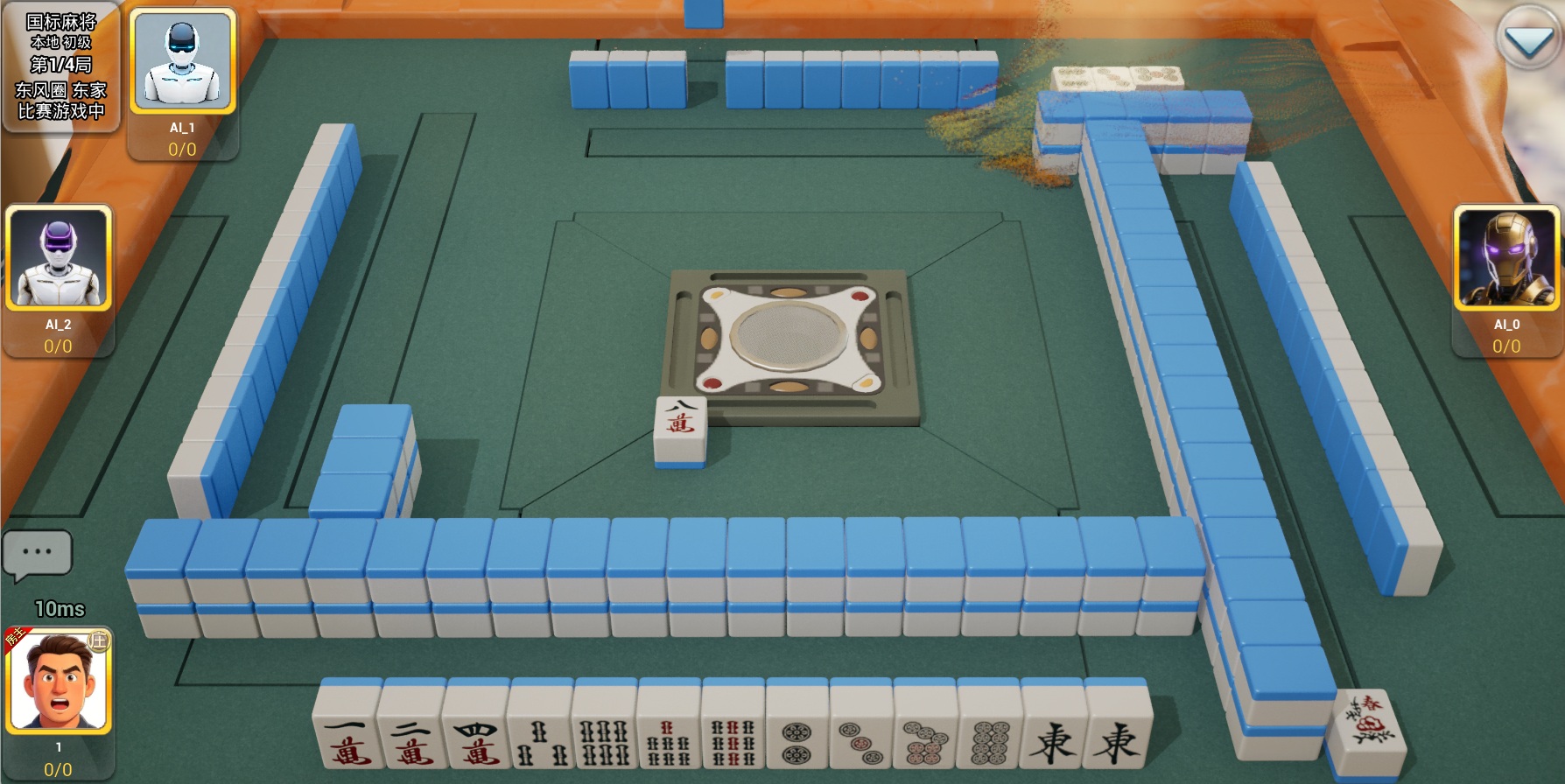
- Two dice are thrown to determine where to draw tiles at the start of each hand.
- Scoring rule: When another player wins the hand, you must pay the base 8 points even if you did not discard the winning tile.
Scoring System
The Chinese Mahjong Competition Rules define 81 fan patterns grouped into 9 series: Honor Tiles, Suit Tiles, Triplet Series, Seven Pairs Series, Suit Combination Series, All Contain Series, Non‑Sequential Series, Winning Method Series and Special Series. Fan values have 12 tiers: 88, 64, 48, 32, 24, 16, 12, 8, 6, 4, 2, 1 point. When a winning hand qualifies, applicable fan patterns stack according to scoring principles.
Scoring Formula Self‑draw win:
(8 + Total Fan Points) × 3Ron (win by discard): The discarder loses-(8 + Total Fan Points); all other non‑winning players lose-8.
Fan Pattern List
88 Fan
- Four Great Winds: A winning hand contains four triplets/kongs of East, South, West, North. Excludes Three Great Winds, Four Identical Triplets, Round Wind, Seat Wind, Terminals Triplet.
- Three Great Dragons: A winning hand contains three triplets/kongs of Red Dragon, Green Dragon, White Dragon. Excludes Double Dragons, Single Dragon; the three dragon triplets forming this pattern do not count as Terminals Triplet.
- All Green: The hand is formed solely of 2,3,4,6,8 Bamboo and Green Dragon. Excludes Mixed One Suit. If no Green Dragon is present, Pure One Suit may be counted.
- Nine Gates: A concealed hand of one suit:
1112345678999. Any tile of this suit completes the win. Excludes Pure One Suit, Fully Concealed Hand, Closed Hand, No Honors, 1 Terminal Triplet. - Four Kongs: The hand contains four Kongs. Excludes All Triplets, Single Wait.
- Seven Consecutive Pairs: Seven consecutive pairs of tiles from one suit. Excludes Pure One Suit, Seven Pairs, Fully Concealed Hand, Closed Hand, No Honors, Single Wait.
- Thirteen Orphans: Special winning hand containing the 1 and 9 of all three suits plus all seven honor tiles; one tile from this set is used as the pair. Excludes Five Types, Fully Concealed Hand, Closed Hand, Single Wait.
64 Fan
- All Terminals: Hand built only with 1 and 9 tiles. Excludes All Triplets, All Terminals and Honors, Two Identical Triplets, Terminals Triplet, No Honors.
- Lesser Four Winds: Three triplets/kongs of wind tiles, with the fourth wind tile as the pair. Excludes Three Great Winds, Terminals Triplet.
- Lesser Three Dragons: Two triplets/kongs of dragon tiles, with the third dragon tile as the pair. Excludes Double Dragons, Single Dragon; the two dragon triplets forming this pattern do not count as Terminals Triplet.
- All Honors: Hand made entirely of honor tiles. Excludes All Triplets, All Terminals and Honors, Terminals Triplet.
- Four Concealed Triplets: Four concealed triplets or concealed Kongs. Excludes All Triplets, Fully Concealed Hand, Closed Hand.
- Two Identical Sequences Twice in One Suit: Two sets each of 123 and 789 of the same suit, with a 5 of that suit as pair. Excludes Seven Pairs, Pure One Suit, All Sequences, Two Identical Sequences, Two End Sequences, No Honors.
48 Fan
- Four Identical Sequences in One Suit: Four identical sequences of one suit. Excludes Three Identical Sequences, Three Consecutive Triplets, Four of a Kind, Two Identical Sequences.
- Four Consecutive Triplets in One Suit: Four triplets/kongs of one suit increasing by 1 each rank. Excludes Three Identical Sequences, Three Consecutive Triplets, All Triplets.
32 Fan
- Four Step Sequences in One Suit: Four sequences of one suit increasing by 1 or 2 ranks. Excludes Three Step Sequences, Two Linked Sequences, Two End Sequences.
- Three Kongs: Hand contains three Kongs (concealed Kongs included).
- Mixed Terminals: Hand consists of honor tiles plus 1 and 9 suit tiles. Excludes All Triplets, All Terminals and Honors, Terminals Triplet.
24 Fan
- Seven Pairs: Special winning hand of seven pairs. Excludes Fully Concealed Hand, Closed Hand, Single Wait.
- Seven Stars Non‑Sequential: One of each East, South, West, North, Red Dragon, Green Dragon, White Dragon, plus seven singleton tiles selected from 147 of one suit, 258 of another suit and 369 of the third suit; no pair. Excludes All Non‑Sequential, Five Types, Fully Concealed Hand, Closed Hand.
- All Even Triplets: Winning hand built from even‑rank (2,4,6,8) triplets/kongs plus a pair. Excludes All Triplets, No Terminals, No Honors.
- Pure One Suit: Hand made only of suit tiles of a single suit. Excludes No Honors.
- Three Identical Sequences in One Suit: Three identical sequences of one suit. Excludes Three Consecutive Triplets, Two Identical Sequences.
- Three Consecutive Triplets in One Suit: Three triplets/kongs of one suit increasing by 1 rank. Excludes Three Identical Sequences.
- All Greater Tiles: Hand made entirely of 7,8,9 tiles. Excludes Over Five, No Honors.
- All Middle Tiles: Hand made entirely of 4,5,6 tiles. Excludes No Terminals.
- All Lesser Tiles: Hand made entirely of 1,2,3 tiles. Excludes Under Five, No Honors.
16 Fan
- Pure Straight: Three sequences 123, 456, 789 from the same suit. Excludes Two Linked Sequences, Two End Sequences.
- Two Sets of Double Identical Sequences Across Three Suits: Two groups each of 123 and 789 from two different suits, with a 5 from the third suit as pair. Excludes All Sequences, Two End Sequences, Two Similar Sequences, No Honors.
- Three Step Sequences in One Suit: Three sequences of one suit increasing by 1 or 2 ranks.
- All Include Five: Every sequence, triplet and pair contains a 5 tile. Excludes No Terminals, No Honors.
- Three Identical Triplets: Three triplets/kongs of identical rank from three different suits. Excludes Two Identical Triplets.
- Three Concealed Triplets: Three concealed triplets or concealed Kongs.
12 Fan
- All Non‑Sequential: 14 singleton tiles selected from one set of 147, one of 258, one of 369 plus honor tiles; no pair. Excludes Five Types, Fully Concealed Hand, Closed Hand.
- Mixed Straight: Special three sequences formed by 147 from suit one, 258 from suit two, 369 from suit three.
- Over Five: Hand built only with 6,7,8,9 tiles. Excludes No Honors.
- Under Five: Hand built only with 1,2,3,4 tiles. Excludes No Honors.
- Three Great Winds: Three wind triplets/kongs. The triplets forming this pattern do not count as Terminals Triplet.
8 Fan
- Mixed Straight (Flower Dragon): 123 from suit one, 456 from suit two, 789 from suit three.
- Non‑Reversible Tiles: Hand composed of tiles whose graphics look identical upside down: 1,2,3,4,5,8,9 Circle; 2,4,5,6,8,9 Bamboo; White Dragon. Excludes Missing One Suit.
- Three Identical Sequences Across Three Suits: Three identical rank sequences from three suits. Excludes Two Similar Sequences.
- Three Consecutive Triplets Across Three Suits: Three triplets/kongs increasing by 1 rank from three suits.
- No Fan Hand: After winning, no fan patterns can be counted (flower tiles excluded).
- Last Tile Self‑Draw: Win by drawing the very last tile from the wall. Excludes Self‑Draw.
- Last Discard Win: Win on the final discarded tile after the wall is exhausted.
- Win on Kong Draw: Win by the supplementary tile drawn after declaring a Kong. Excludes Self‑Draw. If you draw a flower tile after Kong and win by supplementary flower draw, this pattern does not apply.
- Rob the Kong: Win on the tile a player adds to their exposed triplet to form an exposed Kong. Excludes Last Tile of a Kind.
6 Fan
- All Triplets: Four triplets/kongs plus a pair.
- Mixed One Suit: One suit of number tiles plus honor tiles.
- Three Step Sequences Across Three Suits: Three sequences increasing by 1 rank from three suits.
- Five Types: Hand contains Bamboo, Circle, Character, Wind and Dragon tiles.
- Fully Exposed Hand: Four calls (Chow, Pon, Exposed Kong), win by opponent discard on single wait. Excludes Single Wait.
- Two Concealed Kongs: Hand contains two concealed Kongs.
- Double Dragons: Two dragon triplets/kongs. Excludes Single Dragon; the two dragon triplets forming this pattern do not count as Terminals Triplet.
4 Fan
- All Include Terminals: Every sequence, triplet and pair contains a 1 or 9 tile.
- Fully Concealed Hand: No Chow, Pon or exposed Kong; win by self‑draw. Excludes Self‑Draw.
- Two Exposed Kongs: Two exposed Kongs.
- Last Tile of a Kind: Win on the final remaining tile of a rank where three are already exposed on the table.
2 Fan
- Dragon Triplet: Triplet/Kong of Red, Green or White Dragon. This triplet does not count as Terminals Triplet.
- Round Wind Triplet: Triplet/Kong of the current round wind. This triplet does not count as Terminals Triplet.
- Seat Wind Triplet: Triplet/Kong matching your seat wind this hand. This triplet does not count as Terminals Triplet.
- Closed Hand: No Chow, Pon or exposed Kong; win on opponent discard.
- All Sequences: Four sequences plus a pair of number tiles. Excludes No Honors.
- Four of a Kind: Four identical tiles without declaring Kong. May be counted repeatedly.
- Two Identical Triplets: Two triplets of equal rank from two suits. May be counted repeatedly.
- Two Concealed Triplets: Two concealed triplets (concealed Kongs qualify).
- Concealed Kong: Four tiles all drawn by yourself to form a Kong.
- No Terminals: Hand contains no 1,9 number tiles or honor tiles. Excludes No Honors.
1 Fan
- Two Identical Sequences: Two identical sequences from one suit. May be counted repeatedly.
- Two Similar Sequences: Two equal‑rank sequences from two suits. May be counted repeatedly.
- Two Linked Sequences: Two sequences formed by six consecutive tiles of one suit. May be counted repeatedly.
- Two End Sequences: 123 and 789 of the same suit. May be counted repeatedly.
- Terminals Triplet: Triplet/Kong of 1 or 9 tiles. 1 fan per triplet.
- Exposed Kong: You form Kong from an existing concealed triplet when another player discards the fourth tile; or add the fourth tile drawn by yourself to an existing Pon.
- Missing One Suit: Winning hand only contains two suits of number tiles.
- No Honors: Hand contains no honor tiles.
- Edge Wait: Waiting for tile 3 (12 edge) or tile7 (89 edge), and this is your only waiting tile.
- Closed Wait: Waiting for the middle tile of a sequence, and this is your only waiting tile.
- Single Tile Wait: Waiting for one single tile to complete your pair, and this is your only waiting tile.
- Self‑Draw: Win by drawing the tile yourself.
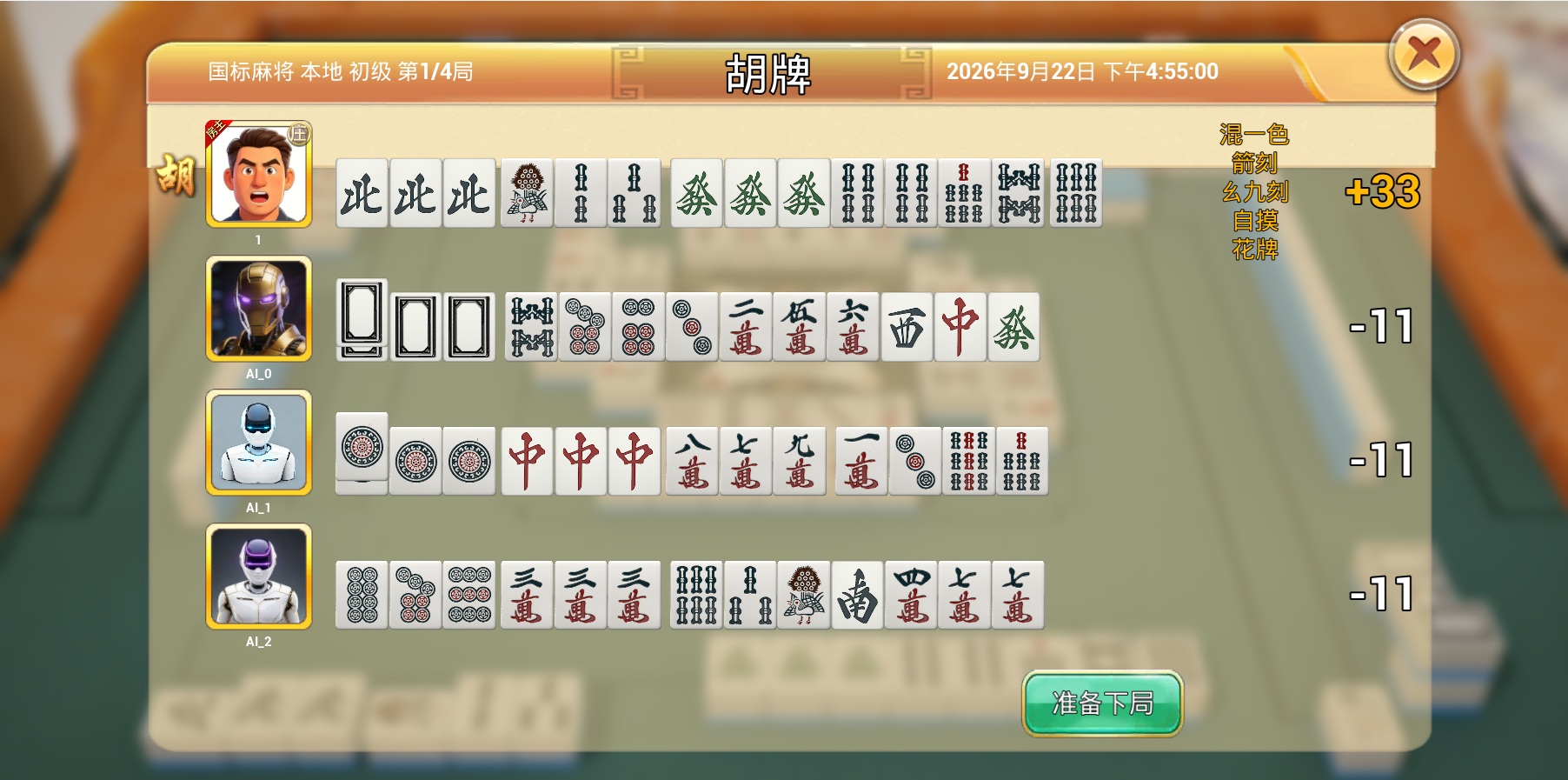
- Flower Tiles: 1 fan per flower tile. Flower fan points do not count toward the minimum 8 fan requirement; they are scored only after winning. Winning by supplementary flower draw counts as Self‑Draw, not Win on Kong Draw.
Note: Multiple rule variants exist for International Standard Mahjong. This game follows Mahjong International League 2015 Rules.
| Item | 1998 Strict Version | 1998 Supplement Version | World Mahjong Organization 2006 | Mahjong International League 2015 |
|---|---|---|---|---|
| Fan values for Double Exposed Kong, Mixed Kong, Double Concealed Kong | 4, 3, 6 | 4, 5, 6 | 4, 6, 8 | 4, 5, 6 |
| Must be fully concealed for: Seven Pairs, All Non‑Sequential, Seven Stars Non‑Sequential, Thirteen Orphans, Four Concealed Triplets, Seven Consecutive Pairs, Nine Gates | Self‑draw | Self‑draw | Fully Concealed Hand | Self‑draw |
| Can All Green, All Honors, All Terminals, Mixed Terminals, All Greater, All Middle, All Lesser be Seven Pairs | No | Yes | Yes | Yes |
| Can Big Three Dragons, Small Three Dragons, Three Winds, Four Identical Sequences, Four Consecutive Triplets count Missing One Suit | No | Yes | Yes | Yes |
Five Core Fan Counting Principles
New players often overlook these principles, which explain why certain patterns cannot stack (e.g. Flower Dragon cannot also count Two Linked Sequences / Two End Sequences, or maximum three fan points for four sequences).
- No Duplication Principle If fan pattern A is formed, and its definition inherently satisfies fan pattern B, then B cannot be scored additionally.
- Key point: "inherently satisfies" means any hand meeting A automatically meets B. Example: Four Great Winds always fulfils All Triplets, so All Triplets is excluded.
- Exception: Only the inherently overlapping part is excluded. Independent separate tiles may still score other fan patterns.
- Applies only when one single pattern inherently contains another. Overlaps caused by combining multiple separate patterns are not restricted.
- No Disassembly Principle Once a fan pattern is confirmed, its own tiles cannot be split and recombined to form new fan patterns for extra points. Example: Four Step Sequences cannot be split internally to count Two Linked Sequences or Two End Sequences.
- No Reuse Principle Tiles already used to form a fan pattern cannot be reused together with other tiles to count the same type of fan pattern again.
- Take Maximum Principle If a hand can be split in multiple ways to calculate fan points, compute all splitting options and select the one yielding the highest total score.
- One Combination Only Principle An unused tile group may combine only once with an already used tile group for fan scoring; it cannot be reused repeatedly.
Practical Game Details
Flower Tiles
- Flower fan points do not count toward the minimum winning fan threshold; they are calculated after the hand is won. Supplementary flower tiles are drawn from the end of the tile wall. Winning via flower supplement counts as Self‑Draw and does not count as Win on Kong Draw.
- Flower tiles may only be supplemented after drawing a tile. You cannot supplement flowers immediately after Chow or Pon.
- Flower tiles may be supplemented consecutively, delayed, or skipped and discarded.
- If you mistakenly treat a regular tile as a flower tile to draw supplementary tiles, you are blocked from winning for that hand and can only continue as a passive player.
Kong Rules
- After Chow or Pon you must discard; you cannot declare Kong immediately. Adding to an exposed triplet or declaring concealed Kong is only permitted after drawing a tile.
- Supplementary tile after Kong is drawn from the end of the tile wall.
- Concealed Kong preserves Closed Hand status. Any exposed Kong invalidates Closed Hand.
- If you draw a flower tile after Kong and win after multiple flower supplements, this does not count as Win on Kong Draw.
Tile Display for Calls
- Chow: The tile you chow on is placed horizontally; your own tiles in the sequence stand vertically.
- Pon: Your two tiles stand vertical. If the discarded tile comes from the player before you, place the left tile horizontal; from the opposite player, place the middle tile horizontal; from the player after you, place the right tile horizontal.
- Exposed Kong: Layout follows Pon. If the fourth tile comes from the opposite player, place any one of the middle tiles horizontal.
Rule reference: Sogou Encyclopedia. This game implements Mahjong International League 2015 International Standard Mahjong rules.